
Marbling Materials

Marbling Supplies for Classic and Ready-to-Use Marbling Techniques
With the right marbling supplies, clean patterns and stable results can be achieved in the marbling bath—both with classic and ready-to-use marbling paints. Classic colors are individually adjusted with water and ox gall, while ready-to-use paints can be dosed directly from the dropper bottle. Thickeners such as lambda carrageenan provide the appropriate consistency, and ox gall supports the even opening and control of the colors. Awls, styluses, and combs enable precise lines, contours, and floral motifs; marbling brushes and sprinkling brushes assist in application and fine distribution. Complementary items such as marbling trays, alum, paper, and cleaning agents like turpentine are essential components of a complete setup for studios or course environments.

Alum and Its Use in Ebru Art Alum is an essential material used particularly when decorating fabrics with the Ebru technique. It acts as a binding agent, helping colors adhere better to the fabric. Additionally, it serves as a deodorizing agent during the breakdown of butyric acid and sweat. Ebru Art on Fabric and the Use of Alum Marbling on fabric is a delicate and beautiful art form. However, fabric marbling differs in some aspects from traditional paper marbling. To ensure that colors adhere properly, the fabric must be pre-treated. This is where alum plays a crucial role. For the best results in fabric marbling, synthetic dyes should be used. Various brands on the market cater to this purpose. You can find a selection under the "Fabric Dyes" category on our website. Recommended Fabrics The following fabrics are best suited for Ebru art: Silk Synthetic Silk Satin These fabrics allow the colors to adhere properly and help create long-lasting, vibrant patterns. Preparing the Fabric with an Alum Solution Before marbling, the fabric should be soaked in an alum solution to enhance color adhesion. Here’s how to prepare the solution: Dissolve 100 g of alum in 1 liter of hot water. Soak the fabric in the solution for some time. Remove the fabric and let it dry. Once dry, iron the fabric to prepare it for marbling. Marbling and Final Processing After creating the design on the water surface, carefully place the fabric onto the marbling bath. Once the pattern is transferred, remove the fabric and briefly rinse it in cold water before allowing it to dry. To set the colors, follow these steps: Iron the fabric from the reverse side for about 5 minutes without steam. This process enhances color durability and ensures long-lasting results. Washing and Maintenance Once marbled, the fabric can be washed at temperatures up to 50°C. It is recommended to use mild detergents. Conclusion Using alum in fabric marbling ensures better color adhesion and contributes to the longevity of patterns. With the right technique, marbled fabrics can retain their vibrancy for years.

Alum and Its Use in Ebru Art Alum is an essential material used particularly when decorating fabrics with the Ebru technique. It acts as a binding agent, helping colors adhere better to the fabric. Additionally, it serves as a deodorizing agent during the breakdown of butyric acid and sweat. Ebru Art on Fabric and the Use of Alum Marbling on fabric is a delicate and beautiful art form. However, fabric marbling differs in some aspects from traditional paper marbling. To ensure that colors adhere properly, the fabric must be pre-treated. This is where alum plays a crucial role. For the best results in fabric marbling, synthetic dyes should be used. Various brands on the market cater to this purpose. You can find a selection under the "Fabric Dyes" category on our website. Recommended Fabrics The following fabrics are best suited for Ebru art: Silk Synthetic Silk Satin These fabrics allow the colors to adhere properly and help create long-lasting, vibrant patterns. Preparing the Fabric with an Alum Solution Before marbling, the fabric should be soaked in an alum solution to enhance color adhesion. Here’s how to prepare the solution: Dissolve 100 g of alum in 1 liter of hot water. Soak the fabric in the solution for some time. Remove the fabric and let it dry. Once dry, iron the fabric to prepare it for marbling. Marbling and Final Processing After creating the design on the water surface, carefully place the fabric onto the marbling bath. Once the pattern is transferred, remove the fabric and briefly rinse it in cold water before allowing it to dry. To set the colors, follow these steps: Iron the fabric from the reverse side for about 5 minutes without steam. This process enhances color durability and ensures long-lasting results. Washing and Maintenance Once marbled, the fabric can be washed at temperatures up to 50°C. It is recommended to use mild detergents. Conclusion Using alum in fabric marbling ensures better color adhesion and contributes to the longevity of patterns. With the right technique, marbled fabrics can retain their vibrancy for years.

Alum – 500 g for Fabric Marbling Alum is an essential material used particularly when decorating fabrics with the Ebru technique. It acts as a binding agent, helping colors adhere better to the fabric. Additionally, it serves as a deodorizing agent during the breakdown of butyric acid and sweat. Ebru Art on Fabric and the Use of Alum Marbling on fabric is a delicate and beautiful art form. However, fabric marbling differs in some aspects from traditional paper marbling. To ensure that colors adhere properly, the fabric must be pre-treated. This is where alum plays a crucial role. For the best results in fabric marbling, synthetic dyes should be used. Various brands on the market cater to this purpose. You can find a selection under the "Fabric Dyes" category on our website. Recommended Fabrics The following fabrics are best suited for Ebru art: Silk Synthetic Silk Satin These fabrics allow the colors to adhere properly and help create long-lasting, vibrant patterns. Preparing the Fabric with an Alum Solution Before marbling, the fabric should be soaked in an alum solution to enhance color adhesion. Here’s how to prepare the solution: Dissolve 100 g of alum in 1 liter of hot water. Soak the fabric in the solution for some time. Remove the fabric and let it dry. Once dry, iron the fabric to prepare it for marbling. Marbling and Final Processing After creating the design on the water surface, carefully place the fabric onto the marbling bath. Once the pattern is transferred, remove the fabric and briefly rinse it in cold water before allowing it to dry. To set the colors, follow these steps: Iron the fabric from the reverse side for about 5 minutes without steam. This process enhances color durability and ensures long-lasting results. Washing and Maintenance Once marbled, the fabric can be washed at temperatures up to 50°C. It is recommended to use mild detergents. Conclusion Using alum in fabric marbling ensures better color adhesion and contributes to the longevity of patterns. With the right technique, marbled fabrics can retain their vibrancy for years.

B3 Plexiglass Marbling Tray – Transparent Ebru Tray for Paper Marbling This high-quality B3 plexiglass marbling tray is ideal for traditional Ebru art, paper marbling and creative water marbling techniques. The transparent plexiglass design gives the tray a clean, modern appearance and supports precise work on the water surface. Large B3 Marbling Tray for Precise Ebru Techniques The smooth inner surface helps marbling paints spread evenly across the water surface. Patterns such as battal, wave, combed or floral motifs can be shaped easily with styluses, combs and brushes. Ideal for Studios, Workshops and Professional Use The B3 plexiglass tray offers more working space than smaller formats and is suitable for larger paper sizes, workshops, courses, studios and professional Ebru projects. Benefits of the B3 Plexiglass Marbling Tray Transparent B3 marbling tray made of plexiglass Suitable for traditional Ebru art and paper marbling Large working surface for creative patterns Smooth inner surface for controlled marbling Lightweight, stable and easy to clean Compatible with carrageenan and CMC marbling size How to Use Fill the tray with prepared marbling size. Drop the marbling paints onto the surface and create patterns using suitable tools. Then carefully place the paper onto the surface to transfer the design. Note As plexiglass is cut and processed, slight processing marks may be visible on the edges. These do not affect the function of the B3 Ebru tray.

Back and Forth Marbling Comb Marbling combs are an essential tool in the art of marbling and are used to pattern the applied color. The needles are made of stainless steel and are placed at equal intervals. The combs offered on our website differ in length, allowing you to find the comb that fits your tray. They also vary in the spacing of the individual needles, giving you the choice and freedom to vary the pattern design. The needles of the back and forth combs offered here have particularly large gaps between them. This makes it easy to create back and forth marbling with zigzag patterns*. However, the artist's imagination has no limits. Needles made of stainless steel Needles with particularly large spacing You can purchase the following comb variants from us: Comb lengths: 35cm, 50cm, 70cm Needle spacing: 20mm, 30mm *Find pattern examples in our blog

Back and Forth Marbling Comb Marbling combs are an essential tool in the art of marbling and are used to pattern the applied color. The needles are made of stainless steel and are placed at equal intervals. The combs offered on our website differ in length, allowing you to find the comb that fits your tray. They also vary in the spacing of the individual needles, giving you the choice and freedom to vary the pattern design. The needles of the back and forth combs offered here have particularly large gaps between them. This makes it easy to create back and forth marbling with zigzag patterns*. However, the artist's imagination has no limits. Needles made of stainless steel Needles with particularly large spacing You can purchase the following comb variants from us: Comb lengths: 35cm, 50cm, 70cm Needle spacing: 20mm, 30mm *Find pattern examples in our blog

Back and Forth Marbling Comb Marbling combs are an essential tool in the art of marbling and are used to pattern the applied color. The needles are made of stainless steel and are placed at equal intervals. The combs offered on our website differ in length, allowing you to find the comb that fits your tray. They also vary in the spacing of the individual needles, giving you the choice and freedom to vary the pattern design. The needles of the back and forth combs offered here have particularly large gaps between them. This makes it easy to create back and forth marbling with zigzag patterns*. However, the artist's imagination has no limits. Needles made of stainless steel Needles with particularly large spacing You can purchase the following comb variants from us: Comb lengths: 35cm, 50cm, 70cm Needle spacing: 20mm, 30mm *Find pattern examples in our blog

Black Marbling Paper – DIN A3, 50 Sheets, 130 g/m² Marbling paper does not need to float on the water surface – stability, flatness and controlled absorption are far more important. Our black marbling paper in DIN A3 format has a weight of 130 g/m² and is particularly suitable for Ebru techniques where a dimensionally stable paper is preferred. Each pack contains 50 sheets. An important quality factor is that the sheets do not curl on the water and do not absorb water uncontrollably. This helps keep the surface stable, allows more precise color control and ensures clean pattern transfer. For long-lasting artwork and durable results – for example endpapers and bookbinding applications – we recommend acid-free paper. This helps marbled surfaces remain stable and colorfast over time. In our online shop you can find marbling papers in various formats such as DIN A3, DIN A4 and DIN A2.
Black Marbling Paper – DIN A4, 100 Sheets, 130 g/m² Marbling paper does not need to float on the surface of the water. Stability, flatness and controlled absorption are far more important. Our black marbling paper in DIN A4 format has a weight of 130 g/m² and is particularly suitable for Ebru techniques where a dimensionally stable paper is preferred. Each pack contains 100 sheets. An important quality factor is that the sheets do not curl on the water and do not absorb water uncontrollably. This helps keep the surface stable, allows more precise color control and ensures clean pattern transfer. For long-lasting artwork and durable results – for example endpapers and bookbinding applications – we recommend acid-free paper. This helps marbled surfaces remain stable and colorfast over time. In our online shop you can find marbling papers in various formats such as DIN A3, DIN A4 and DIN A2.

Chamois Marbling Paper – DIN A3, 500 Sheets, 80 g/m² Marbling paper is selected according to its weight, as it does not need to float on the surface of the water. These marbling sheets are available in weights ranging from 50 g/m² to 300 g/m², with 70–90 g/m² being particularly popular. Depending on the intended use, whether for artwork or bookbinding, the appropriate paper weight can be chosen. One of the most important qualities of marbling paper is that it should not curl on the water surface and should not absorb water uncontrollably. This helps achieve clean and precise marbling results. For long-lasting marbled artworks and durable endpapers or bookbinding applications, acid-free marbling paper is recommended. In our online shop, marbling papers are available in various tray sizes and formats such as DIN A3, DIN A4 and DIN A2.

Marbling Papers - Whit Marbling paper is unique in its weight, as it does not need to float on the surface of the water. These marbling sheets are available in weights ranging from 50g/m² to 300g/m², with 70-90g/m² being the preferred range. Depending on the intended use, whether for paintings or bookbinding materials, the appropriate weight is selected. One of the most important features of these marbling sheets is that they should not roll up on the water or absorb water. For long-lasting marbling artworks and durable marbled images such as endpapers, acid-free marbling sheets are recommended. In our online store, marbling sheets are available in various tray sizes such as DIN-A3, DIN-A4, DIN-A2, etc.

Chamois Marbling Paper 25x35 cm – 100 Sheets, 70 g/m² Chamois-colored marbling paper in 25x35 cm format for traditional Ebru art and paper marbling. The lightweight 70 g/m² paper provides good color absorption and creates natural marbling effects. Traditional Shade for Ebru Artwork The warm chamois tone enhances traditional marbling designs and gives finished artworks a natural appearance. Ideal for practice, workshops and creative applications. Product Features Format: 25x35 cm Contents: 100 Sheets Paper Weight: 70 g/m² Color: Chamois Natural Warm Paper Tone Suitable for Ebru Art and Paper Marbling

Chamois Marbling Paper 35x50 cm – 100 Sheets, 70 g/m² High-quality chamois marmoring paper in 35x50 cm format for traditional Ebru art and paper marbling. The paper weight of 70 g/m² provides good color absorption and is ideal for creative marbling techniques. Natural Chamois Paper for Ebru Techniques The slightly warm chamois shade gives marbled works a classic and natural character. The paper allows clear pattern transfers and is suitable for various Ebru styles such as Battal, Gelgit, combed patterns and floral motifs. Product Features Format: 35x50 cm Contents: 100 Sheets Paper Weight: 70 g/m² Color: Chamois / Natural Tone Suitable for Ebru Art and Paper Marbling For Traditional and Modern Marbling Techniques
Marbling Papers Marbling paper is unique in its weight, as it does not need to float on the surface of the water. These marbling sheets are available in weights ranging from 50g/m² to 300g/m², with 70-90g/m² being the preferred range. Depending on the intended use, whether for paintings or bookbinding materials, the appropriate weight is selected. One of the most important features of these marbling sheets is that they should not roll up on the water or absorb water. For long-lasting marbling artworks and durable marbled images such as endpapers, acid-free marbling sheets are recommended. In our online store, marbling sheets are available in various tray sizes such as DIN-A3, DIN-A4, DIN-A2, etc.

Paint Jars Paint jars used in the art of Ebru should be glass containers with tightly sealed lids. Glass material preserves the quality of the paints and minimizes air contact. However, storage conditions are also crucial. In low humidity environments, jars can remain open for a long time, whereas in high humidity regions, especially in countries like Germany, paints may begin to mold if jars are left open. Additionally, paint jars must be clean and hygienic. Dirty jars or those containing residues of different paints can alter the chemical composition of new paints. Therefore, it is recommended to clean the jars thoroughly after each use. The size of the jars is also important in terms of usability. Very small jars may tip over when a brush is dipped in, causing mess, while in very large jars, the paint may develop an unpleasant odor and deteriorate in consistency over time. For this reason, we have determined the ideal jar sizes. These jars, which increase work efficiency and provide practical use, are available in 50 ml, 105 ml, and 205 ml capacities. These sizes are the most suitable for both professionals and beginners. By using glass jars, you can safely store your paints for an extended period. Recommended Jar Sizes: 50 ml: Ideal for small projects or floral paints. 105 ml: Perfect for medium-scale works. 205 ml: Best suited for large projects and long-term use.

Paint Jars Paint jars used in the art of Ebru should be glass containers with tightly sealed lids. Glass material preserves the quality of the paints and minimizes air contact. However, storage conditions are also crucial. In low humidity environments, jars can remain open for a long time, whereas in high humidity regions, especially in countries like Germany, paints may begin to mold if jars are left open. Additionally, paint jars must be clean and hygienic. Dirty jars or those containing residues of different paints can alter the chemical composition of new paints. Therefore, it is recommended to clean the jars thoroughly after each use. The size of the jars is also important in terms of usability. Very small jars may tip over when a brush is dipped in, causing mess, while in very large jars, the paint may develop an unpleasant odor and deteriorate in consistency over time. For this reason, we have determined the ideal jar sizes. These jars, which increase work efficiency and provide practical use, are available in 50 ml, 105 ml, and 205 ml capacities. These sizes are the most suitable for both professionals and beginners. By using glass jars, you can safely store your paints for an extended period. Recommended Jar Sizes: 50 ml: Ideal for small projects or floral paints. 105 ml: Perfect for medium-scale works. 205 ml: Best suited for large projects and long-term use.

Marbling Papers Marbling paper is unique in its weight, as it does not need to float on the surface of the water. These marbling sheets are available in weights ranging from 50g/m² to 300g/m², with 70-90g/m² being the preferred range. Depending on the intended use, whether for paintings or bookbinding materials, the appropriate weight is selected. One of the most important features of these marbling sheets is that they should not roll up on the water or absorb water. For long-lasting marbling artworks and durable marbled images such as endpapers, acid-free marbling sheets are recommended. In our online store, marbling sheets are available in various tray sizes such as DIN-A3, DIN-A4, DIN-A2, etc.

Marbling Papers Marbling paper is unique in its weight, as it does not need to float on the surface of the water. These marbling sheets are available in weights ranging from 50g/m² to 300g/m², with 70-90g/m² being the preferred range. Depending on the intended use, whether for paintings or bookbinding materials, the appropriate weight is selected. One of the most important features of these marbling sheets is that they should not roll up on the water or absorb water. For long-lasting marbling artworks and durable marbled images such as endpapers, acid-free marbling sheets are recommended. In our online store, marbling sheets are available in various tray sizes such as DIN-A3, DIN-A4, DIN-A2, etc.
Cream Marbling Paper 25x35 cm – 100 Sheets, 90 g/m² Cream-colored marbling paper in 25x35 cm format for Ebru techniques and paper marbling. The stable 90 g/m² quality is suitable for even color transfers and harmonious patterns. Warm Cream Tone for Creative Projects The natural cream color creates an elegant base for traditional and modern Ebru designs. The smaller format is particularly suitable for courses, sample work and creative projects. Product Features Format: 25x35 cm Contents: 100 Sheets Paper Weight: 90 g/m² Color: Cream Pleasant Natural Shade Suitable for Ebru Art and Paper Marbling
Cream Marbling Paper 35x50 cm – 100 Sheets, 90 g/m² High-quality cream-colored marmoring paper in 35x50 cm format for traditional Ebru art and paper marbling. The 90 g/m² paper quality provides a stable surface for even color absorption and detailed pattern transfers. Cream-Colored Paper for Natural Ebru Designs The warm cream tone gives marbled artworks an elegant and classic appearance. Traditional patterns, floral motifs and harmonious color combinations are particularly effective on this paper. Product Features Format: 35x50 cm Contents: 100 Sheets Paper Weight: 90 g/m² Color: Cream Warm Natural Tone Suitable for Ebru Art and Paper Marbling For Traditional and Modern Marbling Techniques

Design Offset Brilliant White Marbling Paper 35x50 cm – 90 g/m² This high-quality Design Offset paper in brilliant white features an exceptionally bright and clean white shade. It is ideal for traditional marbling techniques, paper design, calligraphy and creative art projects. The brilliant white surface highlights vibrant colors, fine lines and detailed patterns particularly well. The bright background creates strong contrasts and a clear presentation of artistic designs. Bright White Shade for Expressive Results Brilliant White Marbling Paper is especially suitable when vivid colors and high-contrast designs are desired. The pleasant paper surface supports even color absorption. Features Format: 35x50 cm (B3) Paper Weight: 90 g/m² Color: Brilliant White High-Quality Design Offset Paper Ideal for Paper Marbling and Calligraphy Suitable for Creative Paper and Art Techniques Smooth Surface for Fine Details

Design Offset Classic White Marbling Paper 35x50 cm – 90 g/m² This high-quality Design Offset paper in Classic White features a balanced, neutral white tone and is ideal for traditional marbling techniques, calligraphy, bookbinding and creative paper and art projects. The classic white shade provides a natural presentation of colors and patterns. Both strong and subtle color gradations are clearly visible on the paper surface, allowing harmonious and high-contrast design results. Classic White Shade for Versatile Applications Classic White Marbling Paper is ideal for traditional Ebru art, handmade papers, calligraphy, book arts and creative design projects. The smooth surface supports even color absorption and precise detail reproduction. Features Format: 35x50 cm (B3) Color: Classic White Paper Weight: 90 g/m² High-Quality Design Offset Paper Ideal for Paper Marbling and Calligraphy Suitable for Creative Paper and Art Techniques Smooth Surface for Fine Details
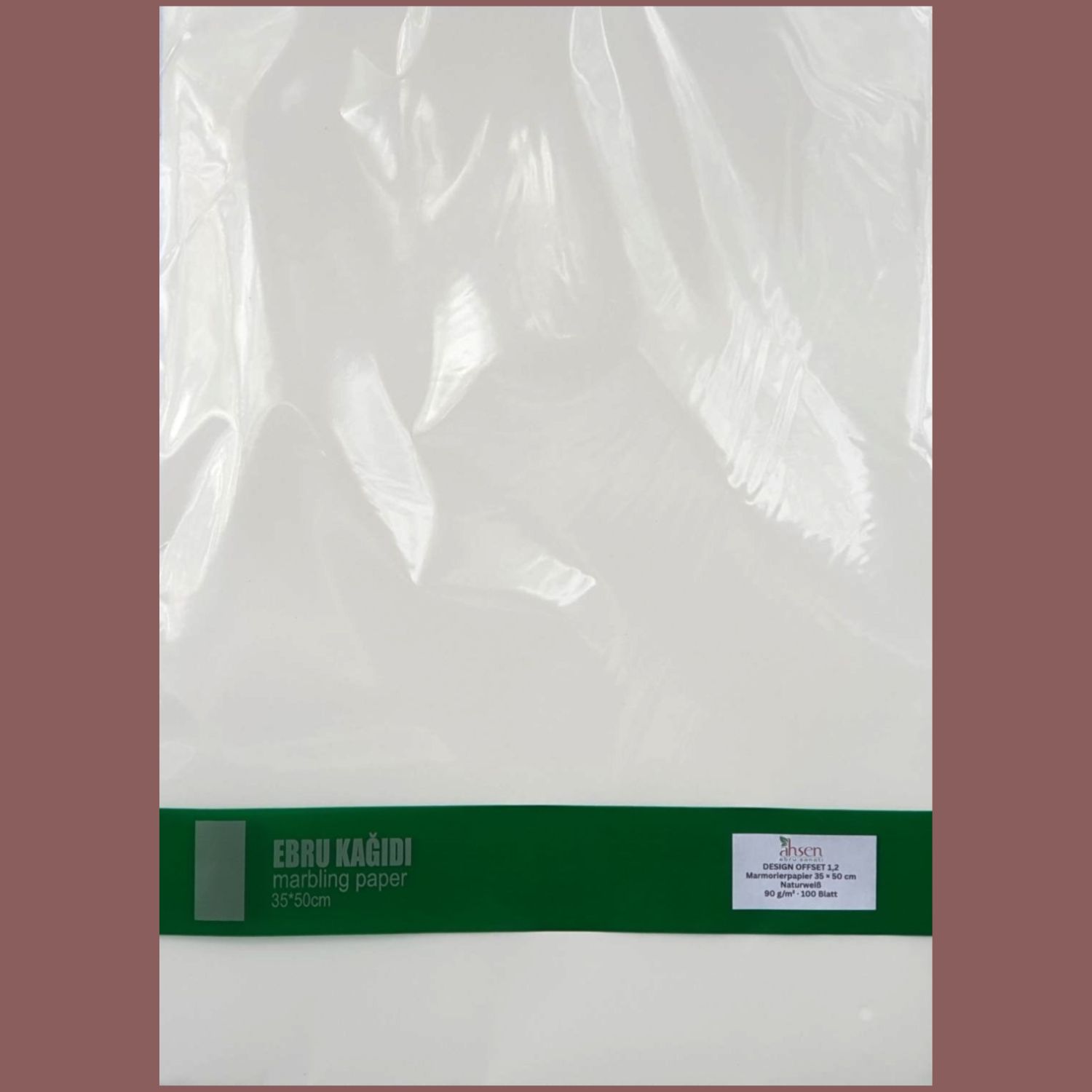
Design Offset Natural White Marbling Paper 35x50 cm – 90 g/m² This high-quality marbling paper in 35x50 cm format features a natural, slightly warm white shade and is ideal for traditional paper marbling, calligraphy and creative art techniques. The pleasant surface of the Design Offset paper supports even color absorption and allows clear patterns, fine lines and harmonious color results. Natural White Shade for Versatile Designs Natural White provides a subtle and elegant foundation for various marbling colors. It is especially suitable for classic and natural designs, creating a balanced and warm appearance. Features Format: 35x50 cm (B3) Paper Weight: 90 g/m² Contents: 100 Sheets Color: Natural White High-Quality Design Offset Paper Suitable for Paper Marbling, Calligraphy and Creative Paper Design Fine Surface for Detailed Patterns

For A3 Tray: 3-Piece Marbling Comb Set Marbling Comb Set This 3-piece marbling comb set is designed for use with A3 trays and is suitable for traditional paper water marbling. The set includes three different combs: wave comb (tidal pattern), bouquet comb, and standard comb. The combs allow the creation of various patterns and structures on thickened water and are intended for larger paper formats. Tooth spacing (standard comb): 5 mm, 7 mm, or 9 mm. Selection is made by default based on availability. A preferred spacing can be specified when ordering.