
Marbling Materials

Marbling Supplies for Classic and Ready-to-Use Marbling Techniques
With the right marbling supplies, clean patterns and stable results can be achieved in the marbling bath—both with classic and ready-to-use marbling paints. Classic colors are individually adjusted with water and ox gall, while ready-to-use paints can be dosed directly from the dropper bottle. Thickeners such as lambda carrageenan provide the appropriate consistency, and ox gall supports the even opening and control of the colors. Awls, styluses, and combs enable precise lines, contours, and floral motifs; marbling brushes and sprinkling brushes assist in application and fine distribution. Complementary items such as marbling trays, alum, paper, and cleaning agents like turpentine are essential components of a complete setup for studios or course environments.

Ebru Needles: Tools for Artistic Creation The art of Ebru has been practiced for centuries, and the quality of the tools used directly affects the precision and mastery of an artist’s work. One such tool is the Ebru needle. These needles help transfer and shape colors on the water surface of the Ebru tray. Structure and Use of Ebru Needles Ebru needles consist of wooden handles and stainless steel tips, varying in thickness from 0.5 mm to 5 mm. Thicker needles are used for broader patterns, while finer needles are ideal for intricate details. Types and Features Standard Needles: Used for free-form patterns. Flower Needles: Specially shaped for floral motifs. With these, you can create different petal numbers. Hyacinth Needle: A multi-needle tool, ideal for making hyacinth patterns. Enhance Your Art Choosing the right needle ensures more precise and aesthetic patterns. Visit our website to explore different Ebru needle models.

Ebru Needles: Tools for Artistic Creation The art of Ebru has been practiced for centuries, and the quality of the tools used directly affects the precision and mastery of an artist’s work. One such tool is the Ebru needle. These needles help transfer and shape colors on the water surface of the Ebru tray. Structure and Use of Ebru Needles Ebru needles consist of wooden handles and stainless steel tips, varying in thickness from 0.5 mm to 5 mm. Thicker needles are used for broader patterns, while finer needles are ideal for intricate details. Types and Features Standard Needles: Used for free-form patterns. Flower Needles: Specially shaped for floral motifs. With these, you can create different petal numbers. Hyacinth Needle: A multi-needle tool, ideal for making hyacinth patterns. Enhance Your Art Choosing the right needle ensures more precise and aesthetic patterns. Visit our website to explore different Ebru needle models.

Thickener for Marbling Art Thickeners increase the viscosity of the water and help marbling paints spread in a controlled manner on the water surface. With the correct consistency, the colours can be shaped more easily and transferred cleanly onto paper. There are many different thickeners on the market, and their properties can vary considerably. However, not every thickener is suitable for marbling art. Even products with similar names may differ significantly in solubility, viscosity, resting time and in the way the colours behave on the water surface. The thickener we offer has been selected after extensive practical testing specifically because of its suitability for marbling art. When prepared correctly, it creates an even consistency that allows suitable marbling paints to work in a controlled and reliable way on the surface. How should the thickener be prepared? As a general starting point, we recommend approximately 4 g per 1 litre of water for our thickener. The powder should be added slowly to the water and mixed thoroughly to minimise the formation of lumps. After mixing, it is advisable to let the solution rest for a while so that an even consistency can develop. The required amount may vary depending on the marbling technique and personal working method: For beginners or for a slightly more fluid consistency, around 3–4 g per litre may be sufficient. For general use, around 4 g per litre is a good starting point. For certain techniques where a somewhat higher viscosity is preferred, for example floral marbling techniques, around 5 g per litre may be suitable. For combed marbling and similar techniques, a slightly more fluid consistency can often be easier to work with. If the liquid in the marbling tray appears too thick, a small amount of water can be added carefully during use. For this reason, it is often more practical to begin with approximately 4 g per litre and adjust the consistency later if necessary. Is every thickener suitable for marbling art? No. Many products are capable of thickening water, but not all of them are suitable for marbling art. Some users, for example, try wallpaper paste because it also increases the viscosity of the water. However, such products can negatively affect the behaviour of the marbling colours, the appearance of the colours and the formation of the patterns, and they generally do not produce the same result as a thickener selected specifically for marbling art. Other thickeners may also differ considerably from one another. With some products, only a very small quantity is required, while others may need a much larger amount or may still fail to produce the desired consistency. For this reason, different thickeners should not be considered equivalent simply because they have a similar general name, and the same quantities should not automatically be used for all products.

Thickening Agents Thickening Agents Thickening agents prevent colors in Ebru art from sinking to the bottom of the water and allow the colors to spread on the water surface. These substances increase the viscosity of the water in the marbling tray, helping the colors adhere easily to the paper. Thickening agents are divided into two categories: natural and artificial. Natural thickening agents are obtained from tragacanth roots or Irish moss (carrageenan) and are used in powder form. Since sheet tragacanth requires labor-intensive preparation, natural substances such as seaweed and powdered tragacanth are more commonly preferred. Carrageenan provides successful results in Ebru art and positively affects the appearance of colors. Synthetic thickening agents are also used, with some artists using materials such as wallpaper paste. However, this method can cause colors to lose their vibrancy and lead to cracks in patterns. How to Prepare Thickening Agent (Powdered Tragacanth)? Since there are different types and qualities of thickening agents, the appropriate measurements may vary for each product. It is generally prepared by mixing it with hot or lukewarm water. For example, 4-5 grams of thickening agent should be added to 1 liter of water and stirred well until fully dissolved. Storing the prepared thickened water in a cool environment or adding a preservative helps delay spoilage.

Thickening Agents Thickening Agents Thickening agents prevent colors in Ebru art from sinking to the bottom of the water and allow the colors to spread on the water surface. These substances increase the viscosity of the water in the marbling tray, helping the colors adhere easily to the paper. Thickening agents are divided into two categories: natural and artificial. Natural thickening agents are obtained from tragacanth roots or Irish moss (carrageenan) and are used in powder form. Since sheet tragacanth requires labor-intensive preparation, natural substances such as seaweed and powdered tragacanth are more commonly preferred. Carrageenan provides successful results in Ebru art and positively affects the appearance of colors. Synthetic thickening agents are also used, with some artists using materials such as wallpaper paste. However, this method can cause colors to lose their vibrancy and lead to cracks in patterns. How to Prepare Thickening Agent (Powdered Tragacanth)? Since there are different types and qualities of thickening agents, the appropriate measurements may vary for each product. It is generally prepared by mixing it with hot or lukewarm water. For example, 4-5 grams of thickening agent should be added to 1 liter of water and stirred well until fully dissolved. Storing the prepared thickened water in a cool environment or adding a preservative helps delay spoilage.

Karin Awl 6-Piece Set – High-Quality Tools for Ebru Art The Karin Awl 6-Piece Set is an essential tool for traditional Ebru art. This set includes six different awls, each specially designed to manipulate colors precisely on the water surface and create unique patterns. Each awl in this set is made of stainless metal and mounted on an ergonomic wooden handle. With different needle thicknesses ranging from 0.5 mm to 5 mm, it allows for a variety of artistic applications. Finer awls are ideal for detailed work, while thicker awls can shape larger color areas. In addition to classic awls, this set includes flower awls specifically designed for creating delicate floral patterns. Additionally, the hyacinth awl, which features multiple needles placed side by side, allows for the creation of unique textures on the water surface. Perfect for both beginners and experienced artists, the Karin Awl 6-Piece Set provides the ideal equipment for creative Ebru techniques. With these high-quality tools, you can create mesmerizing marbling patterns. These products are available on our website, where you can find more information and place an order.

Thickening Agents Thickening Agents Thickening agents prevent colors in Ebru art from sinking to the bottom of the water and allow the colors to spread on the water surface. These substances increase the viscosity of the water in the marbling tray, helping the colors adhere easily to the paper. Thickening agents are divided into two categories: natural and artificial. Natural thickening agents are obtained from tragacanth roots or Irish moss (carrageenan) and are used in powder form. Since sheet tragacanth requires labor-intensive preparation, natural substances such as seaweed and powdered tragacanth are more commonly preferred. Carrageenan provides successful results in Ebru art and positively affects the appearance of colors. Synthetic thickening agents are also used, with some artists using materials such as wallpaper paste. However, this method can cause colors to lose their vibrancy and lead to cracks in patterns. How to Prepare Thickening Agent (Powdered Tragacanth)? Since there are different types and qualities of thickening agents, the appropriate measurements may vary for each product. It is generally prepared by mixing it with hot or lukewarm water. For example, 4-5 grams of thickening agent should be added to 1 liter of water and stirred well until fully dissolved. Storing the prepared thickened water in a cool environment or adding a preservative helps delay spoilage.

Thickening Agents Thickening agents prevent colors in the art of Ebru from sinking to the bottom of the water and ensure that the colors spread on the water’s surface. These substances increase the viscosity of the water in the Ebru tray, allowing the colors to be easily transferred onto the paper. Thickening agents are divided into two categories: natural and artificial. Natural thickening agents are derived from tragacanth roots or Irish moss (carrageenan) and are used in powder form. Since preparing sheet tragacanth is labor-intensive, natural substances such as seaweed and powdered tragacanth are more commonly preferred. Carrageenan yields good results in Ebru printing techniques and also enhances the appearance of colors. Synthetic thickening agents are also used, with some artists opting for wallpaper paste. However, this method causes the colors to lose their vibrancy and creates cracks in the patterns. How is Thickening Agent (Powdered Tragacanth) Prepared? Since there are various types and qualities of thickening agents, the correct amounts may vary depending on the product. It is usually mixed with lukewarm water (21-25 degrees). For example, 4 grams of thickening agent should be added to 1 liter of water and stirred thoroughly until it is completely dissolved. The prepared thickening agent should be stored in a cool place to extend its shelf life.

Lambda Carrageenan λ-Carrageenan does not form gels and is highly soluble both cold and hot. This carrageenan is widely used in instant products where no heating should occur. λ-Carrageenan does not form helix structures upon cooling. Thickening agents in this case are moss extracts or carrageenan in powdered form. They are mixed with water and ensure that the water attains a consistency on which colors can be sprinkled and worked with—without sinking in the water. Lambda Carrageenan: It is the best thickening agent used as a raw material in the production of marbling water and is preferred by masters. Carrageenan is a brown algae plant harvested from the depths of the ocean. It is considered the best illuminator-intensifier for marbling art. Carrageenan can remain intact under normal temperature and humidity conditions for up to 30 days. Delivered to your home within a few days

Seaweed Extract (λ-Carrageenan) – Natural Thickener for Marbling Art Lambda Carrageenan (λ-Carrageenan) is one of the best thickening agents used in marbling (Ebru) art. It does not form a gel and dissolves quickly in both cold and hot water, making it easy to use. Since it does not require heating, it is commonly preferred in instant (ready-to-use) products. When cooled, it does not form helix structures, ensuring a homogeneous consistency. The Importance of Lambda Carrageenan in Marbling Art Thickening agents, such as seaweed extracts or powdered carrageenan, are used in marbling art to increase the viscosity of water. When mixed with water, λ-Carrageenan creates an ideal consistency in the marbling tray, preventing the colors from sinking. This property allows the colors to move freely on the surface, making it easier for artists to shape patterns. Lambda Carrageenan is one of the best thickeners for preparing marbling water and is preferred by professionals. This natural thickener, derived from brown seaweed found in the depths of the ocean, keeps the water clear and enhances the vibrancy of colors. Carrageenan can be stored for up to 30 days under normal temperature and humidity conditions. Lambda Carrageenan Packaging Options Available in different package sizes to meet your needs: 100 g Lambda Carrageenan: Ideal for medium-sized marbling works. 250 g Lambda Carrageenan: Recommended for artists who work with marbling regularly. 500 g Lambda Carrageenan: Suitable for workshops and large-scale production. How to Use Lambda Carrageenan? Since thickening agents come in different types and qualities, the correct proportions may vary by product. λ-Carrageenan dissolves easily in warm or hot water. For example, add 4-5 grams of λ-Carrageenan to 1 liter of water and stir thoroughly until completely dissolved. Letting the mixture rest for a few hours enhances its solubility. This thickener ensures a homogeneous viscosity for marbling water, helping the colors spread more evenly. Marbling water prepared with λ-Carrageenan should be stored in a cool, dark place to prolong its usability. Order & Delivery Lambda Carrageenan remains fresh for a long time if protected from air and moisture. Your order can be delivered to your address within a few days. For the best quality and reliable use, it is recommended to store it under proper conditions.

Lambda Carragen: Ideal Thickener for Marbling Lambda Carragen (λ-Carrageen) does not form a gel structure and dissolves perfectly in hot and cold liquids. This property makes it ideal for products requiring immediate use. Applications Thickeners: Increases the viscosity of liquids for a more stable consistency. Ebru Art: Used in Ebru and other water-based art techniques. Artistic Applications: Facilitates better control of colors on the liquid surface. Natural Source: Derived from brown seaweed and environmentally friendly. Advantages Durability: Resistant to temperature and humidity fluctuations. Natural & Sustainable: Eco-friendly and biodegradable. Versatile Use: Preferred in the food, art, and industrial sectors. Order & Delivery Lambda Carragen is delivered to your doorstep within a few days.

Large Marbling Sprinkle Brush with Beechwood Handle This large marbling sprinkle brush has been specially developed for traditional Ebru and marbling art. It is ideal for applying and evenly distributing marbling colors on the prepared marbling surface. The bristles are made from firm, specially selected natural hair. They provide controlled color absorption and support the formation of even color droplets on the water surface. This allows traditional base patterns and various marbling techniques to be created reliably. The handle is crafted from high-quality beechwood. The sturdy wood fits comfortably in the hand and offers excellent control during use. Its robust construction makes it suitable for regular studio work as well as courses and workshops. This brush is particularly suitable for larger color areas and traditional Ebru base patterns. It can be used by both beginners and experienced artists. Product Features Large marbling sprinkle brush For applying and distributing marbling colors Firm, specially selected natural hair High-quality beechwood handle For traditional Ebru and marbling techniques Supports even color distribution Suitable for courses, workshops and studios Durable and robust construction Suitable for beginners and experienced artists

Large Marbling Sprinkle Brush with Rose Branch Handle This traditional marbling sprinkle brush has been specially developed for marbling art. It is ideal for applying and distributing colors on the prepared marbling surface and supports the creation of classic base patterns and other traditional marbling techniques. The bristles are made from carefully selected black horse tail hair. These natural hairs are firm, flexible, and durable. They provide controlled paint distribution and help create clean and uniform paint droplets on the marbling bath. The handle is made from natural rose branch. This traditional material has been used for generations in marbling art and offers comfortable handling during use. The total length is approximately 30 cm. The horse tail hairs are attached to the rose branch using traditional handcraft techniques. This creates an authentic tool for traditional marbling work. The brush is suitable for both beginners and experienced artists. It can be used in workshops, courses, studios, and creative hobby projects. Product Features Large marbling sprinkle brush For traditional marbling techniques Black horse tail hair bristles Natural rose branch handle Approx. 30 cm length Traditional handcrafted production Even paint distribution on the marbling bath Durable and robust construction Suitable for beginners and experienced artists

Marbling Awl for Floral Patterns Marbling sticks and awls are metal rods attached to a wooden handle, with varying tip thicknesses. After dropping the colors onto the surface, the needle is lightly dipped into the color and moved like a pen to create patterns. Our handmade floral awls make it easier to draw flower designs. They are used to create different flowers and allow the formation of various petal counts. The awl is dipped into the appropriate color and placed into the water. Then, a regular awl is used to close the "colorless gap" in the center. Finally, the desired color is applied to the center, completing the flower. This process can save up to 100 individual steps. The thickness of the needle and the arrangement of the needles may vary depending on the awl. Below, you can see examples created with 4-needle and 5-needle awls: We dip the awl into the color and then into the design. We fill the empty space in the center. We fill the center of the flower with the desired color.

Marbling Comb (Bouquet - Zigzag) Ebru combs are an important tool in traditional Ebru and marbling art and are used for creating decorative patterns on the applied colors. The needles are made of rustproof stainless steel and are positioned at equal distances. The combs offered on our website differ both in comb length and in the spacing between the individual needles, allowing you to choose the most suitable comb for your marbling tray and preferred pattern technique. The needles of the zigzag combs offered here are arranged in an offset pattern. This design makes it especially easier to create Bouquet Ebru patterns* compared to traditional straight combs. The special needle arrangement enables flowing and decorative floral patterns while also offering great freedom for creative and individual pattern compositions. Needles made of rustproof stainless steel Offset needle arrangement Suitable for bouquet and zigzag marbling patterns Available variants: Comb lengths: 35 cm, 45 cm, 50 cm, 55 cm, 70 cm, 100 cm Needle spacing: 40 mm, 50 mm *Pattern examples can be found on our blog

Marbling Comb (Bouquet - Zigzag) Ebru combs are an important tool in traditional Ebru and marbling art and are used for creating decorative patterns on the applied colors. The needles are made of rustproof stainless steel and are positioned at equal distances. The combs offered on our website differ both in comb length and in the spacing between the individual needles, allowing you to choose the most suitable comb for your marbling tray and preferred pattern technique. The needles of the zigzag combs offered here are arranged in an offset pattern. This design makes it especially easier to create Bouquet Ebru patterns* compared to traditional straight combs. The special needle arrangement enables flowing and decorative floral patterns while also offering great freedom for creative and individual pattern compositions. Needles made of rustproof stainless steel Offset needle arrangement Suitable for bouquet and zigzag marbling patterns Available variants: Comb lengths: 35 cm, 45 cm, 50 cm, 55 cm, 70 cm, 100 cm Needle spacing: 40 mm, 50 mm *Pattern examples can be found on our blog

Marbling Comb (Bouquet - Zigzag) Ebru combs are an important tool in traditional Ebru and marbling art and are used for creating decorative patterns on the applied colors. The needles are made of rustproof stainless steel and are positioned at equal distances. The combs offered on our website differ both in comb length and in the spacing between the individual needles, allowing you to choose the most suitable comb for your marbling tray and preferred pattern technique. The needles of the zigzag combs offered here are arranged in an offset pattern. This design makes it especially easier to create Bouquet Ebru patterns* compared to traditional straight combs. The special needle arrangement enables flowing and decorative floral patterns while also offering great freedom for creative and individual pattern compositions. Needles made of rustproof stainless steel Offset needle arrangement Suitable for bouquet and zigzag marbling patterns Available variants: Comb lengths: 35 cm, 45 cm, 50 cm, 55 cm, 70 cm, 100 cm Needle spacing: 40 mm, 50 mm *Pattern examples can be found on our blog

Marbling Comb (Bouquet - Zigzag) Ebru combs are an important tool in traditional Ebru and marbling art and are used for creating decorative patterns on the applied colors. The needles are made of rustproof stainless steel and are positioned at equal distances. The combs offered on our website differ both in comb length and in the spacing between the individual needles, allowing you to choose the most suitable comb for your marbling tray and preferred pattern technique. The needles of the zigzag combs offered here are arranged in an offset pattern. This design makes it especially easier to create Bouquet Ebru patterns* compared to traditional straight combs. The special needle arrangement enables flowing and decorative floral patterns while also offering great freedom for creative and individual pattern compositions. Needles made of rustproof stainless steel Offset needle arrangement Suitable for bouquet and zigzag marbling patterns Available variants: Comb lengths: 35 cm, 45 cm, 50 cm, 55 cm, 70 cm, 100 cm Needle spacing: 40 mm, 50 mm *Pattern examples can be found on our blog

Marbling Comb (Bouquet - Zigzag) Ebru combs are an important tool in traditional Ebru and marbling art and are used for creating decorative patterns on the applied colors. The needles are made of rustproof stainless steel and are positioned at equal distances. The combs offered on our website differ both in comb length and in the spacing between the individual needles, allowing you to choose the most suitable comb for your marbling tray and preferred pattern technique. The needles of the zigzag combs offered here are arranged in an offset pattern. This design makes it especially easier to create Bouquet Ebru patterns* compared to traditional straight combs. The special needle arrangement enables flowing and decorative floral patterns while also offering great freedom for creative and individual pattern compositions. Needles made of rustproof stainless steel Offset needle arrangement Suitable for bouquet and zigzag marbling patterns Available variants: Comb lengths: 35 cm, 45 cm, 50 cm, 55 cm, 70 cm, 100 cm Needle spacing: 40 mm, 50 mm *Pattern examples can be found on our blog

Marbling Comb (Bouquet - Zigzag) Ebru combs are an important tool in traditional Ebru and marbling art and are used for creating decorative patterns on the applied colors. The needles are made of rustproof stainless steel and are positioned at equal distances. The combs offered on our website differ both in comb length and in the spacing between the individual needles, allowing you to choose the most suitable comb for your marbling tray and preferred pattern technique. The needles of the zigzag combs offered here are arranged in an offset pattern. This design makes it especially easier to create Bouquet Ebru patterns* compared to traditional straight combs. The special needle arrangement enables flowing and decorative floral patterns while also offering great freedom for creative and individual pattern compositions. Needles made of rustproof stainless steel Offset needle arrangement Suitable for bouquet and zigzag marbling patterns Available variants: Comb lengths: 35 cm, 45 cm, 50 cm, 55 cm, 70 cm, 100 cm Needle spacing: 40 mm, 50 mm *Pattern examples can be found on our blog

Marbling Comb (Bouquet - Zigzag) Ebru combs are an important tool in traditional Ebru and marbling art and are used for creating decorative patterns on the applied colors. The needles are made of rustproof stainless steel and are positioned at equal distances. The combs offered on our website differ both in comb length and in the spacing between the individual needles, allowing you to choose the most suitable comb for your marbling tray and preferred pattern technique. The needles of the zigzag combs offered here are arranged in an offset pattern. This design makes it especially easier to create Bouquet Ebru patterns* compared to traditional straight combs. The special needle arrangement enables flowing and decorative floral patterns while also offering great freedom for creative and individual pattern compositions. Needles made of rustproof stainless steel Offset needle arrangement Suitable for bouquet and zigzag marbling patterns Available variants: Comb lengths: 35 cm, 45 cm, 50 cm, 55 cm, 70 cm, 100 cm Needle spacing: 40 mm, 50 mm *Pattern examples can be found on our blog

Marbling Comb (Bouquet - Zigzag) Ebru combs are an important tool in traditional Ebru and marbling art and are used for creating decorative patterns on the applied colors. The needles are made of rustproof stainless steel and are positioned at equal distances. The combs offered on our website differ both in comb length and in the spacing between the individual needles, allowing you to choose the most suitable comb for your marbling tray and preferred pattern technique. The needles of the zigzag combs offered here are arranged in an offset pattern. This design makes it especially easier to create Bouquet Ebru patterns* compared to traditional straight combs. The special needle arrangement enables flowing and decorative floral patterns while also offering great freedom for creative and individual pattern compositions. Needles made of rustproof stainless steel Offset needle arrangement Suitable for bouquet and zigzag marbling patterns Available variants: Comb lengths: 35 cm, 45 cm, 50 cm, 55 cm, 70 cm, 100 cm Needle spacing: 40 mm, 50 mm *Pattern examples can be found on our blog

Marbling Comb (Bouquet - Zigzag) Ebru combs are an important tool in traditional Ebru and marbling art and are used for creating decorative patterns on the applied colors. The needles are made of rustproof stainless steel and are positioned at equal distances. The combs offered on our website differ both in comb length and in the spacing between the individual needles, allowing you to choose the most suitable comb for your marbling tray and preferred pattern technique. The needles of the zigzag combs offered here are arranged in an offset pattern. This design makes it especially easier to create Bouquet Ebru patterns* compared to traditional straight combs. The special needle arrangement enables flowing and decorative floral patterns while also offering great freedom for creative and individual pattern compositions. Needles made of rustproof stainless steel Offset needle arrangement Suitable for bouquet and zigzag marbling patterns Available variants: Comb lengths: 35 cm, 45 cm, 50 cm, 55 cm, 70 cm, 100 cm Needle spacing: 40 mm, 50 mm *Pattern examples can be found on our blog
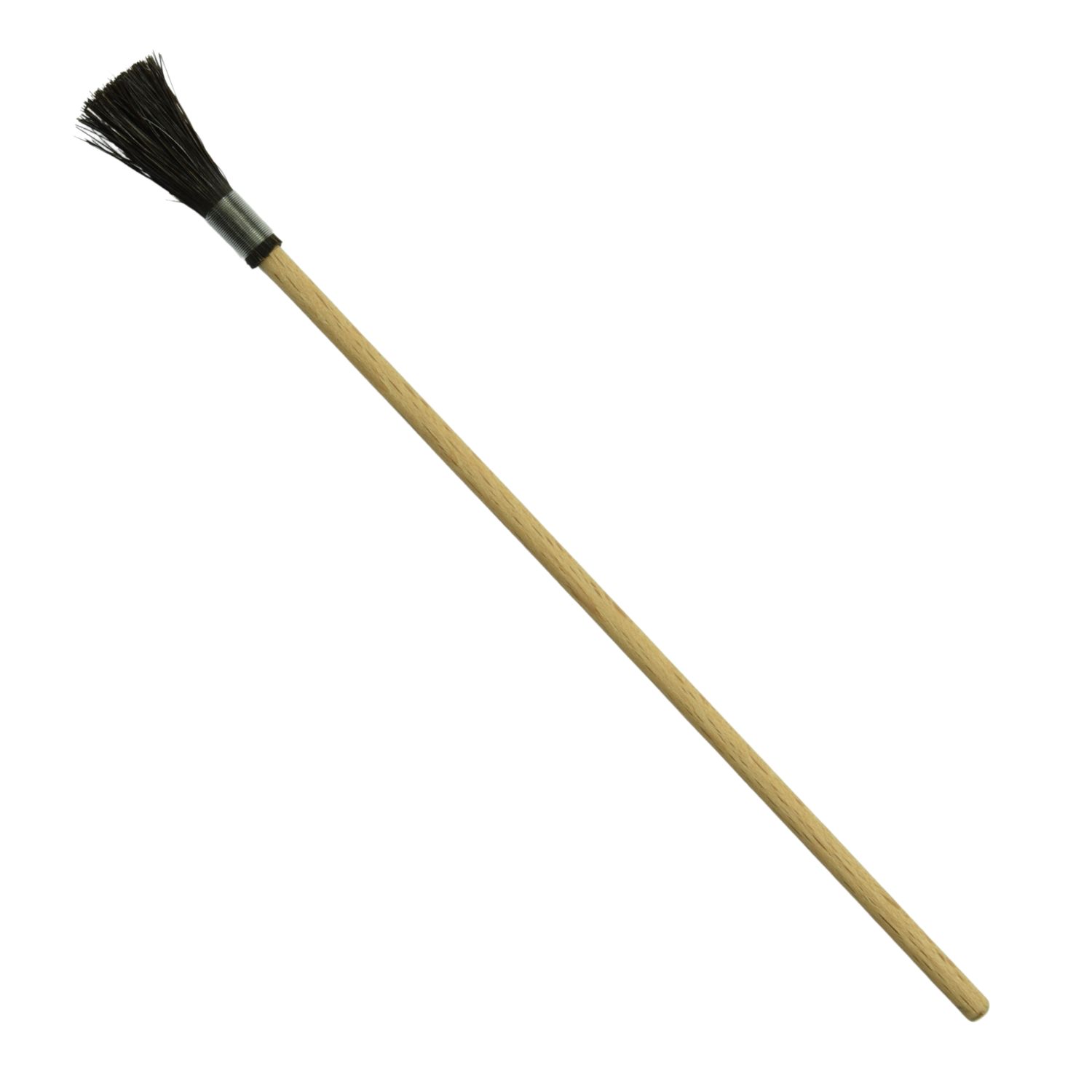
Marbling Mixing Brush with Beechwood Handle This marbling mixing brush was specially developed for stirring and blending marbling paints. It is ideal for preparing colours evenly before use on the prepared marbling ground. The bristles are made from firm, specially selected natural hair. This allows the paint to be picked up, mixed and processed in a controlled and clean way. The robust structure supports an even mixture of colour pigments. The handle is made from high-quality beechwood. The stable wooden handle sits comfortably in the hand and is suitable for regular use in studios, courses and creative work. Product Features Marbling mixing brush For stirring and blending marbling paints Firm, specially selected natural hair Handle made from high-quality beechwood For traditional Ebru and marbling techniques Supports clean preparation of different colours Suitable for courses, workshops and studios Robust and durable design Suitable for beginners and experienced artists